

EMDR Therapy For Tinnitus Hertfordshire
EMDR therapy for tinnitus can assist with tinnitus habituation blocks. Tinnitus habituation means no longer being aware of tinnitus symptoms most of the time and if you do become aware of tinnitus it is no longer disturbing. Tinnitus blocks refer to things that can stop us from habituating to tinnitus.
What Is EMDR Therapy?
EMDR is a somatic psychotherapy. EMDR stands for eye movement desensitisation & reprocessing therapy. It is the leading evidence based approach to PTSD, It can also help phobias and tinnitus.
EMDR does not rely on more traditional talk therapies, or medication but instead uses Rapid Eye Movement (REM) as the basis for treatment. Rapid Eye Movement (REM) is a natural function of the body and occurs when we are in deep sleep. The body uses REM sleep to help it to process daily emotional experiences.
Dr Francine Shapiro, who developed the practice of EMDR therapy in 1989 found that only three 90-minute sessions of EMDR therapy could alleviate symptoms of PTSD in over 77% of the patients that she treated.
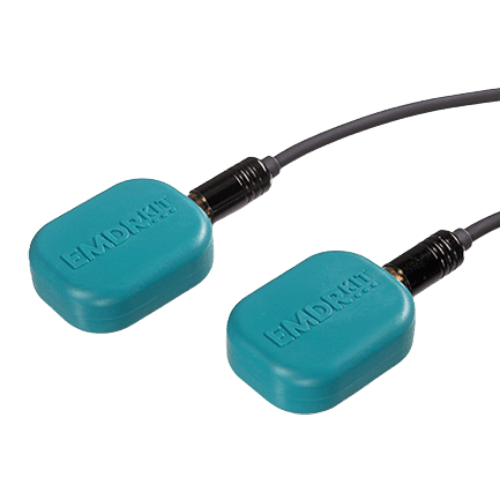
EMDR works by way of billateral stimulation. This means the left and right hand side of the body is stimulated alternately. Stimulation includes, taps, eye movements, buzzers or auditory tones. Whilst billateral stimulation is happening a client works on free associations linked to a particular problem, in this case tinnitus. When EMDR protocols are followed a person is able to desensitise themselves to a difficult experience and reprocess the meaning something has for them.
How can EMDR help with tinnitus?
- It can help with trauma or PTSD symptoms which you might be experiencing as a result of trauma which caused tinnitus.
- It can help with trauma or PTSD symptoms which the experience of problematic tinnitus can cause.
- It reduces the automatic fear reaction from the experience of tinnitus.
- It is a useful tool to help with tinnitus habituation. It forms a big part of tinnitus retraining therapy especially if your tinnitus was caused by trauma.
- It can help with resourcing you to mamage tinnitus better specifically at difficult times. e.g. when trying to sleep.


What Is Problematic Tinnitus?
We might have had the experience of having ringing in our ears coming away from a concert or nightclub. This usually passes a few hours or days later. Tinnitus which sticks around is called chronic or prolonged tinnitus. Problematic tinnitus is tinnitus which is chronic and causes a negative somatic and psychological reaction to a tinnitus stimulus. Around 5% of people who have tinnitus, experience problematic tinnitus. This means 95% are not overly bothered by it. Risk of developing problematic tinnitus is linked to personality typology, the cause of tinnitus, historical experience of trauma, perceived tinnitus level and what level of support and advice you have been given in relation to tinnitus. Getting the right help and support as soon as possible makes a difference to whether tinnitus becomes problematic.
What Is Problematic Tinnitus?
We might have had the experience of having ringing in our ears coming away from a concert or nightclub. This usually passes a few hours or days later. Tinnitus which sticks around is called chronic tinnitus. Problematic tinnitus is tinnitus which is chronic and causes a negative somatic and psychological reaction to a tinnitus stimulus. 5% of people who have tinnitus, experience problematic tinnitus. This means 95% are not overly bothered by it. Risk of developing problematic tinnitus is linked to personality typology, the cause of tinnitus, historical experience of trauma, perceived tinnitus level and what level of support and advice you have been given in relation to tinnitus. Getting the right help and support as soon as possible makes a difference to whether tinnitus becomes problematic.
What Is Tinnitus Habituation?
Tinnitus habituation means you have tinnitus but have got used to it. This means that when your attention is drawn to it you hear it but do not have a stress reaction to it. It might also mean that you are not aware of having tinnitus most of the time. We can still have a bad day even after we have habituated to tinnitus as circumstances change and the perceived level of tinnitus can fluctuate. If you are experiencing problematic tinnitus you can habituate to it and still have tinnitus but your experience of tinnitus is completely different following tinnitus retraining therapy.

What Is Tinnitus Habituation?
Tinnitus habituation means you have tinnitus but have got used to it. This means that when your attention is drawn to it you hear it but do not have a stress reaction to it. It might also mean that you are not aware of having tinnitus most of the time. We can still have a bad day even after we have habituated to tinnitus as circumstances change and the perceived level of tinnitus can fluctuate. If you are experiencing problematic tinnitus you can habituate to it and still have tinnitus but your experience of tinnitus is completely different following tinnitus retraining therapy.

What Is Tinnitus Retraining Therapy?
Our tinnitus retraining therapy uses a number of different approaches to help change the relationship you have with tinnitus. Effectively changing a negative relationship with tinnitus to a neutral one.
A tinnitus retraining therapy session might involve working on negative thoughts related to problematic tinnitus, changing behaviour or working on a negative somatic reaction to tinnitus, befriending tinnitus, managing sleep difficulties or how to relax with tinnitus. We also work on tinnitus associated difficulties which include trauma, stress and anxiety. The methods as listed above might include: body psychotherapy, emdr therapy, behavioural therapy, counselling and psychotherapy, mindfulness based stress reduction, tinnitus sound therapy and practical help.
What Is Tinnitus Retraining Therapy?
Our tinnitus retraining therapy uses a number of different approaches to help change the relationship you have with tinnitus. Effectively changing a negative relationship with tinnitus to a neutral one.
A tinnitus retraining therapy session might involve working on negative thoughts related to problematic tinnitus, changing behaviour or working on a negative somatic reaction to tinnitus, befriending tinnitus, managing sleep difficulties or how to relax with tinnitus. We also work on tinnitus associated difficulties which include trauma, stress and anxiety. The methods as listed above might include: body psychotherapy, emdr therapy, behavioural therapy, counselling and psychotherapy, mindfulness based stress reduction, tinnitus sound therapy and practical help.
Tinnitus In The UK %
Professional help for tinnitus

Matthew Alderton - Psychotherapist
MA, BSc, PG Dip, PG Dip Psych
I am a trauma informed psychotherapist and emdr practitioner. Causes of tinnitus and the experience of tinnitus are sometimes closely related to trauma. Experiencing PTSD and tinnitus at the same time amplify each other. I have personal experience of managing tinnitus as well as the training and therapeutic tools to help people with tinnitus. Examples of therapies and interventions I use include: body psychotherapy, tinnitus counselling, psychotherapy, mindfulness stress reduction, emotional freedom techniques and emdr therapy. EMDR is helpful for ptsd as well as tinnitus. All of these make up our tinnitus retraining therapy.
I work in a holistic integrative way, taking into account the ecology of a person's life as well as their mind, body and soul. I am personable, friendly and down to earth. I provide a safe, confidential, collaborative environment for you to work through your difficulty. I look forward to hearing from you.
Trauma & Somatic Therapy Explained
This video is not specific to tinnitus but it will give you some context to the way EMDR works for someone suffering from PTSD and how it has helped them.
Warning: (this video contains scenes some viewers might find upsetting).


Bilateral Movement Demonstration
EMDR therapy utilises bilateral stimulation. Bilateral stimulation referrs to a gentle stimulation of the right and left side of the body alternately. Bilateral stimulation is carried out at different speeds depending on the EMDR therapy phase of treatment.
This can include following a finger, light stick or moving ball. It can also include physical body tapping, auditory beats or bleeps or vibrating buzzers. Or a combination of several forms of billateral stimulation. Click on the video and follow the ball. This is an example of billateral eye movement.
Study Showing The Efficacy Of EMDR For Tinnitus
A study was carried out in 2019 which treated patients at Norfolk University Hospital NHS foundation Trust. This is a summary of its conclusions.
Tinnitus Symptoms Reduction
Study Conclusions: This study has demonstrated that the provision of EMDR has resulted in a clinically and statistically significant improvement in tinnitus symptoms in the majority of those participants who took part. Furthermore, the treatment effect was maintained at 6 months after treatment ceased. This study is of particular interest, as the study protocol was designed to be purposefully inclusive of a diverse range of tinnitus patients. However, as a small uncontrolled study, these results do not consider the significant effects of placebo and therapist interaction. Larger high-quality studies are essential for the verification of these preliminary results.
PDF showing the full study details. 2019 UK Tinnitus Research © 2019 The American Laryngological, Rhinological and Otological Society, Inc.
EMDR For Tinnitus Herts Benefits
Reduce triggering
EMDR can help to reduce a negative autonomic reaction to tinnitus. Once this is achieved other therapies have more of a tangible benefit to problematic tinnitus.
Balance
EMDR can help to calm the nervous system. When our nervous system is less reactve to tinnitus we are able to reinstate calm, balance and homeostasis back into our lives.
Related difficulties
Trauma and other conditins closely related to tinnitus can get in the way of tinnitus habituation. When you work through these difficulties it is easier to habituate to tinnitus.
Relaxation
EMDR can allow us to start to relax, even if we are still experiencing tinnitus. When we can relax tinnitus can start to back off.

Client's Experience Of Tinnitus Retraining Therapy
EMDR Therapy For Tinnitus Hertfordshire
Cuffley, Potters Bar, Hertfordshire, EN6
My home based practice is located in leafy green Hertfordshire. A five miniutes walk from Cuffley train station and located ten minutes by car from junction 24 and 25 of the M25.
Cuffley is ideally located to help clients in Hertford, Potters Bar, Stevenage, Baldock, Enfield, Hoddesdon, Cheshunt, Broxbourne, St Albans and Barnet.

Therapy Enquiry
If you would like to book therapy with us or have a therapy enquiry please fill in our contact form.